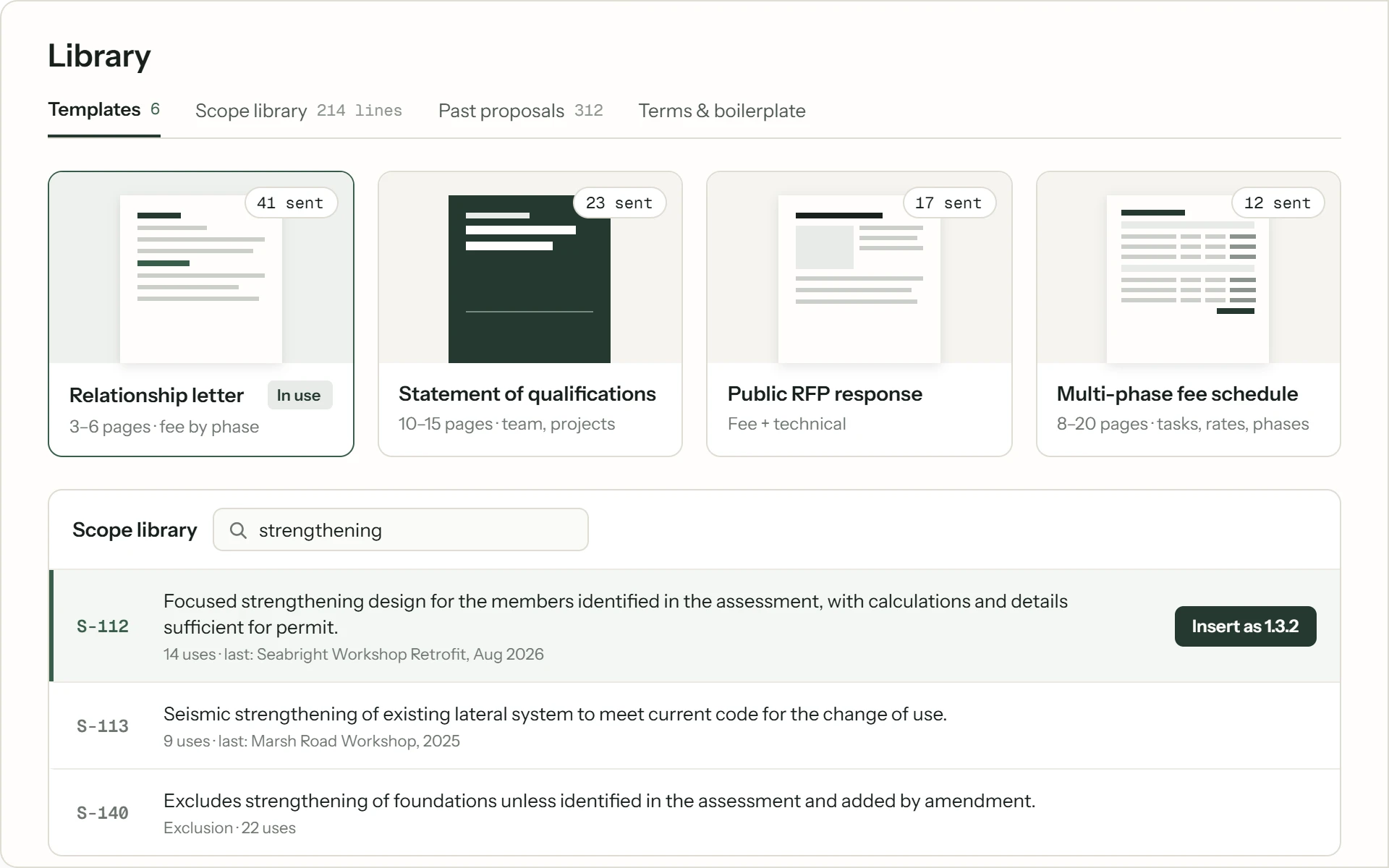
Your templates, your language.
Start with your firm’s format and the language your team has already refined. Build on your best past work.
Your firm’s language, people, scope and fees, assembled in your format and ready for your team to review.
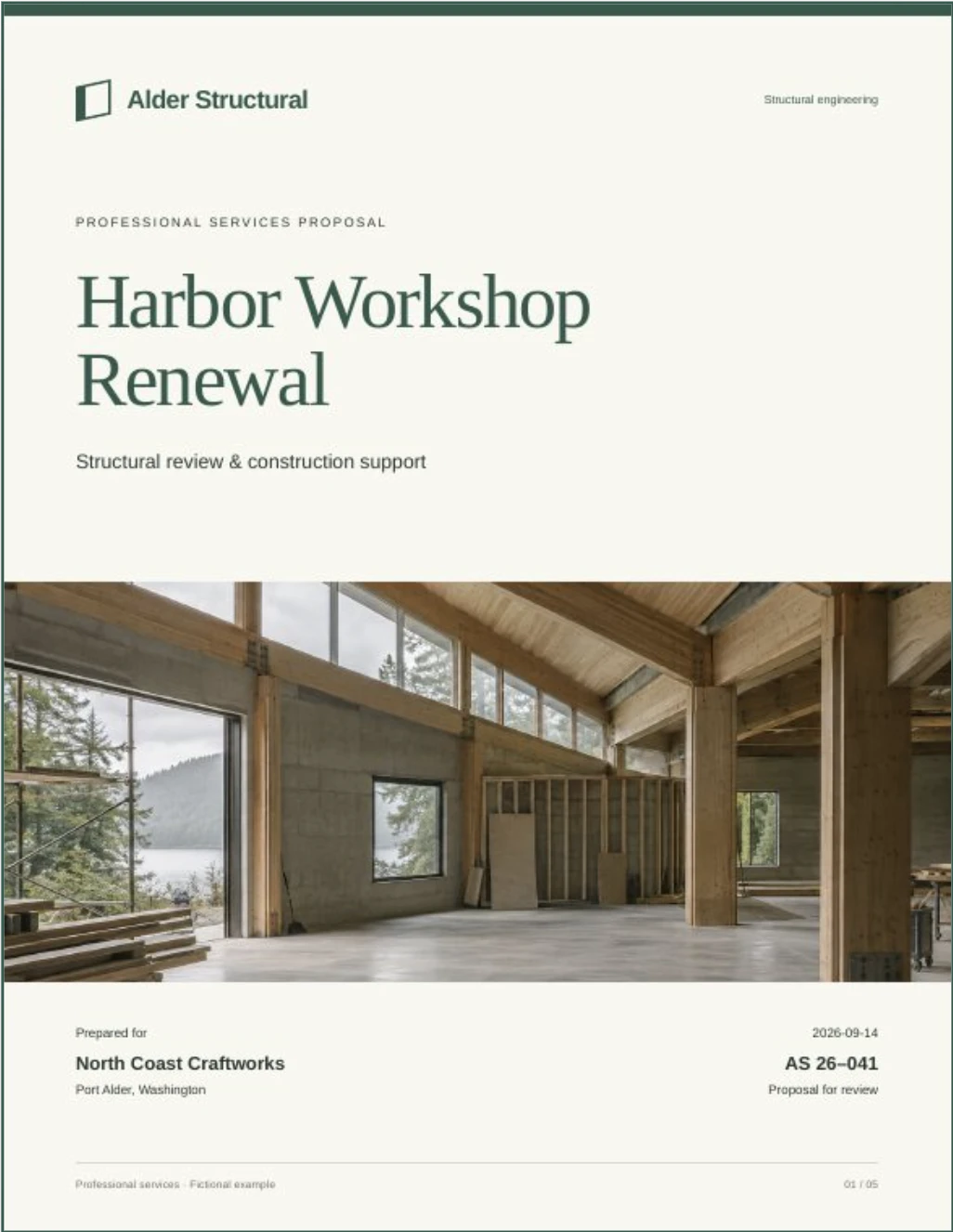
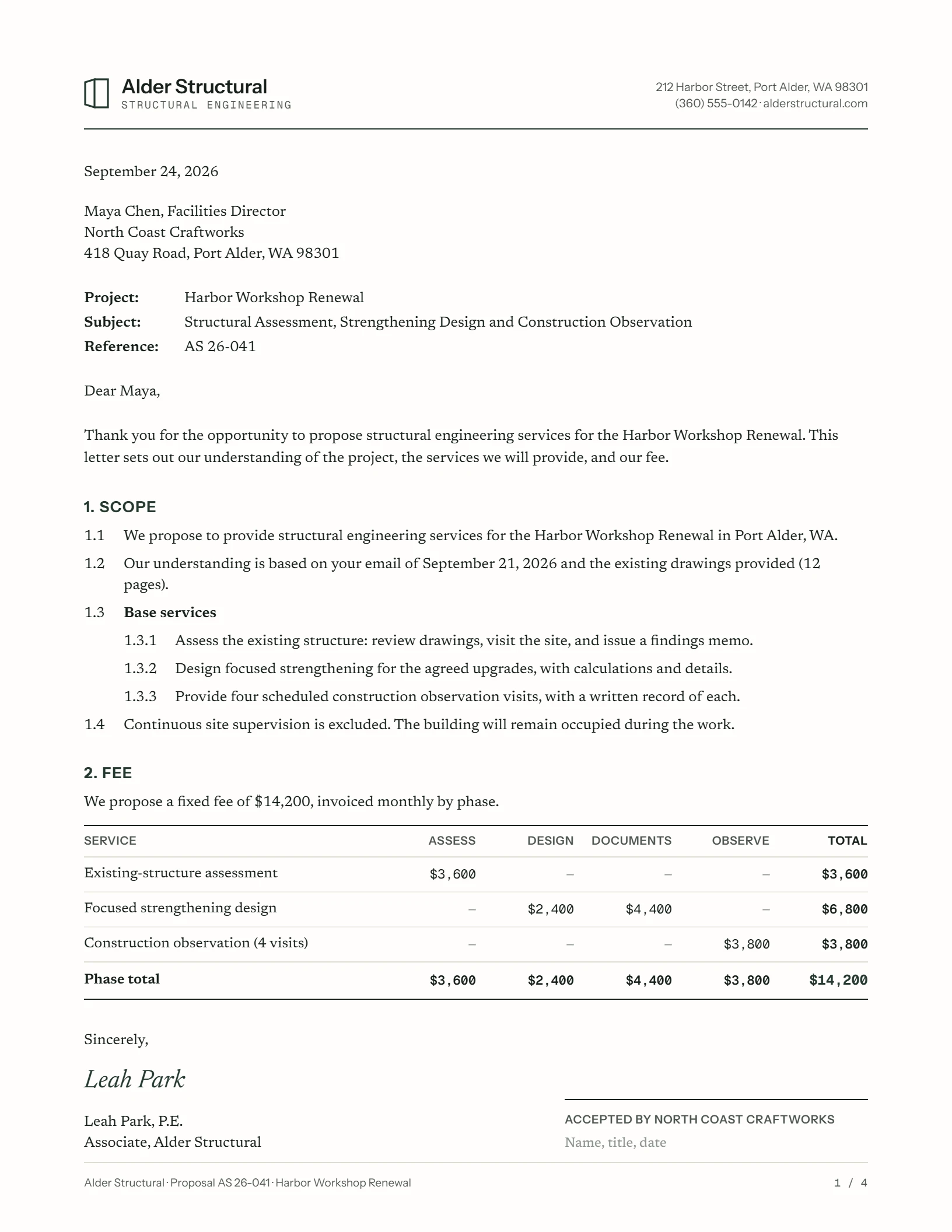
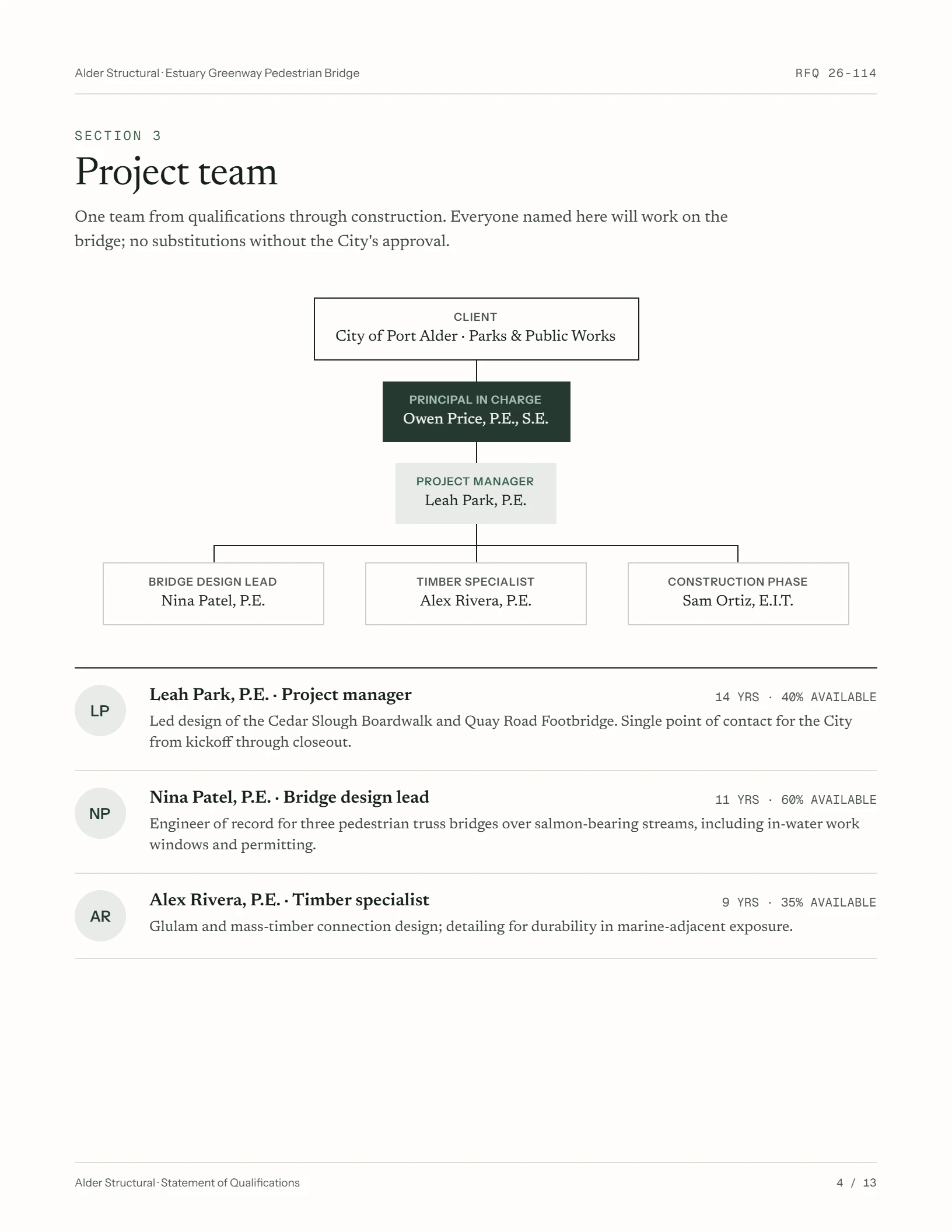
Your team brings the judgment. ProposalXL brings the material, people and document into one place, so you can focus on the proposal in front of you.
Start with your firm’s format and the language your team has already refined. Build on your best past work.
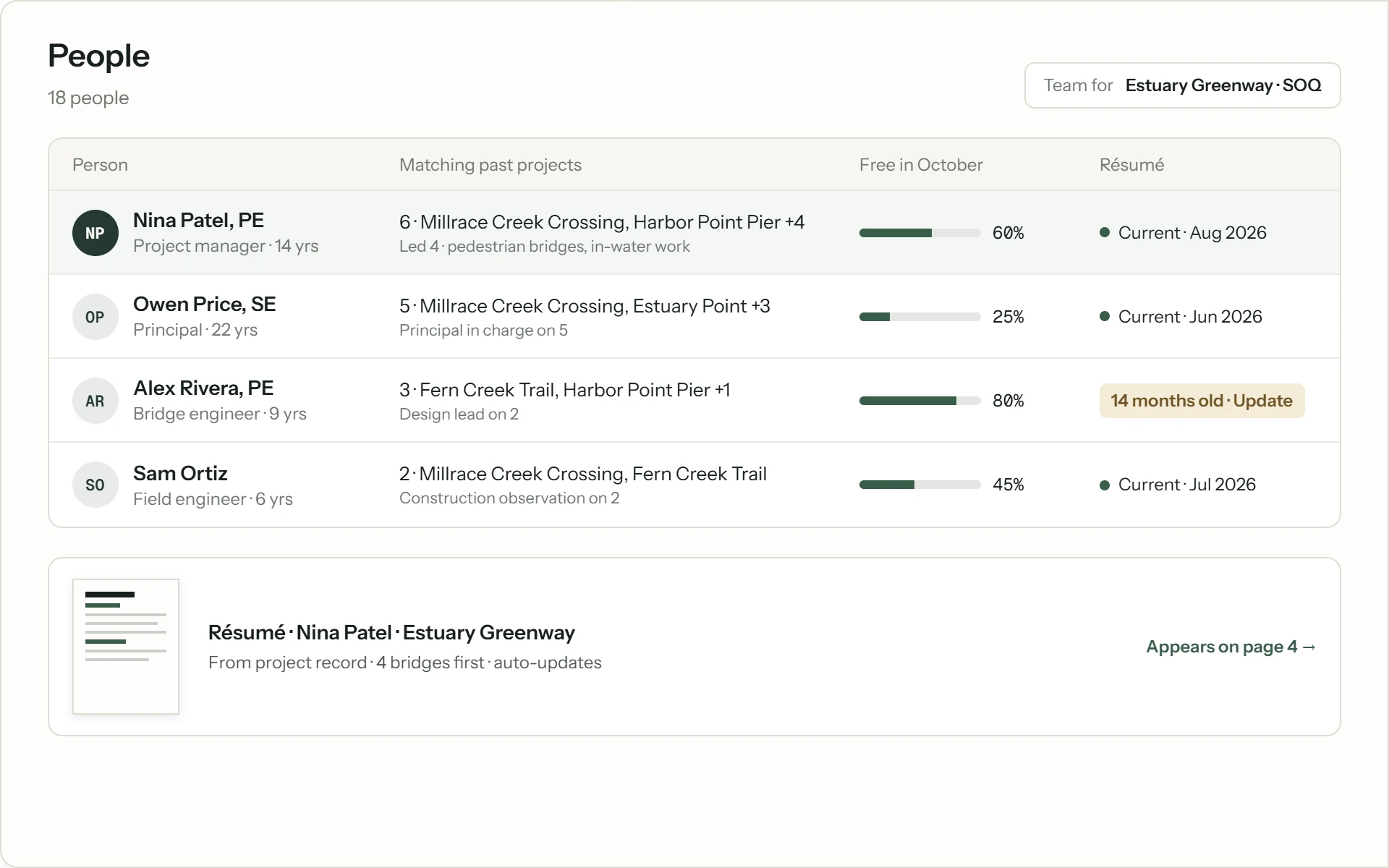
Bring résumés and project history into the proposal. Choose the people and past work that fit the pursuit, with a shared record behind each page.
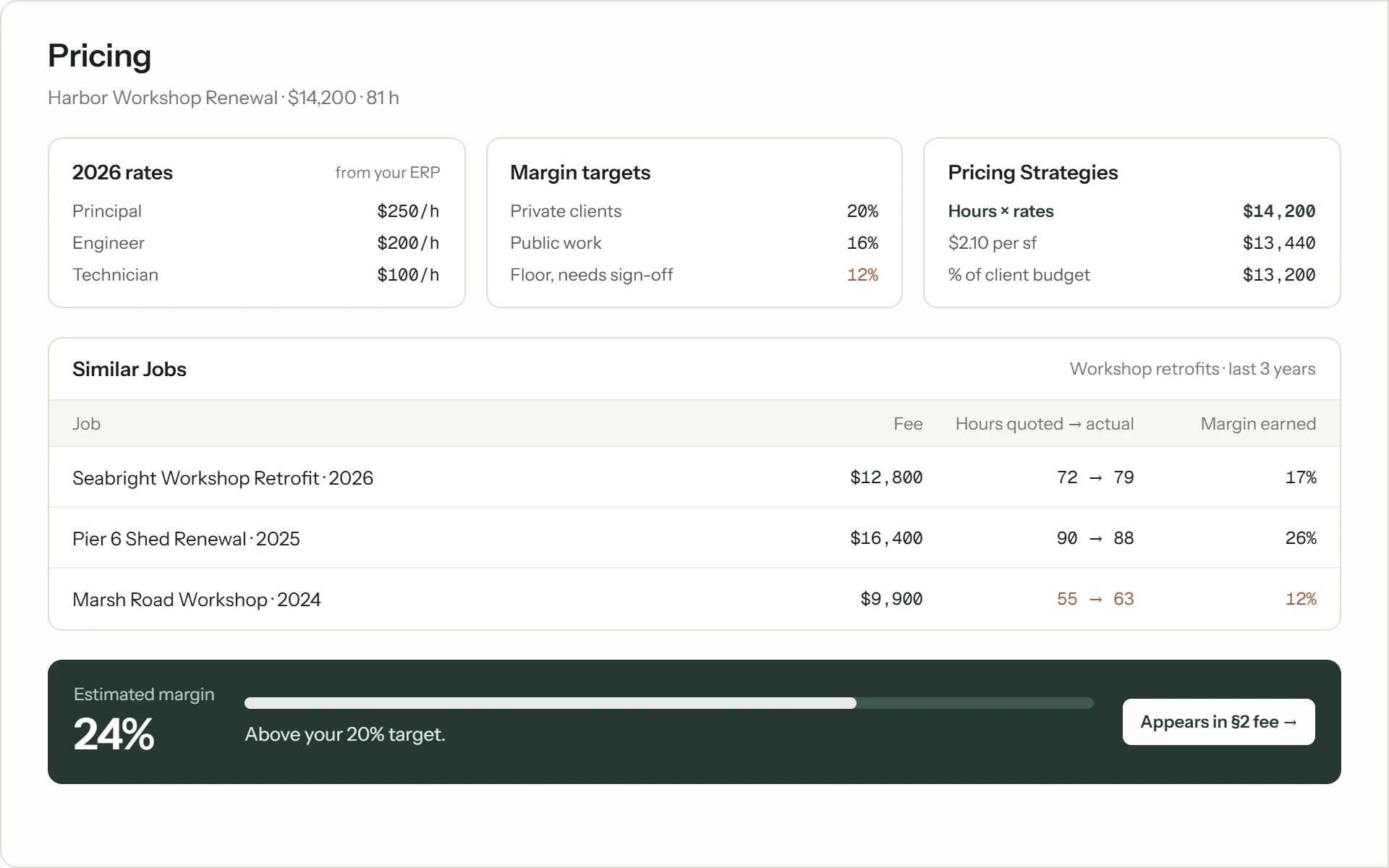
Develop the scope and price the work using your people and rates. Review the hours, assumptions and margin before the proposal goes out.
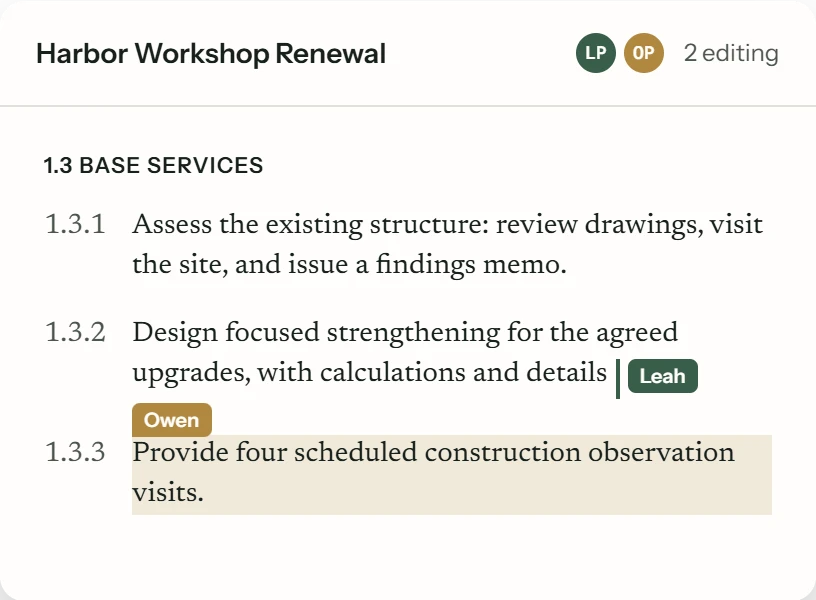
Give each section an owner. Write, edit and review together, with clear assignments and a shared view of the document as it takes shape.
Your principals, project managers and marketing team set the approach, the scope and the fee, and send the proposal. ProposalXL does the rest of the work around them.
Firms write two kinds of proposals, and they behave differently. ProposalXL handles both from the same record of your firm.
| Relationship proposal | Competitive pursuit | |
|---|---|---|
| Starts with | A client you know emails or calls about a project | An agency or owner issues an RFQ or RFP |
| You send | A letter with scope, fee, schedule and terms, or an additional-services letter on a current job | A statement of qualifications or a full proposal, organized the way the solicitation asks |
| It is judged on | Fit, a clear scope and a fee the client can approve | Published evaluation criteria, often before price is discussed |
| Who writes it | Usually one principal or project manager, quickly | Several section owners on a deadline, coordinated by marketing |
| ProposalXL | Reads the request, scopes from your library, prices at your rates, starts the letter in your format | Turns the solicitation into the outline, gives each section an owner, checks the response before it goes out |
| More | Step by step · Fee proposals and letters | Step by step · Civil engineering firms |
That is usually a scope-and-fee letter, a proposal for an existing client, or added services on a current project. We set ProposalXL up around your templates, past proposals and rates, then add the next proposal type when your team is ready.
See how firms start →Software that produces the proposals architecture, engineering and construction firms send to win work: proposal letters, fee proposals, statements of qualifications and RFP responses. ProposalXL works from your firm’s own records, its people, projects, scope language and rates, so each proposal starts from your best past work.
Yes. Setup starts from your templates, past proposals and rates. Proposals come out on your letterhead, in your brand standards and in the language your firm already uses.
Yes. Relationship proposals start from a client’s request and produce a letter with scope and fee. Competitive pursuits start from the solicitation and produce a structured response with an owner on every section. Both draw on the same record of your firm.
Engineering and architecture firms that write both kinds of proposals, usually with principals and project managers writing between project work. Civil, structural, MEP and architecture practices each have their own conventions, and ProposalXL is set up around yours.